1. Introduction: What Is Digital Marketing?
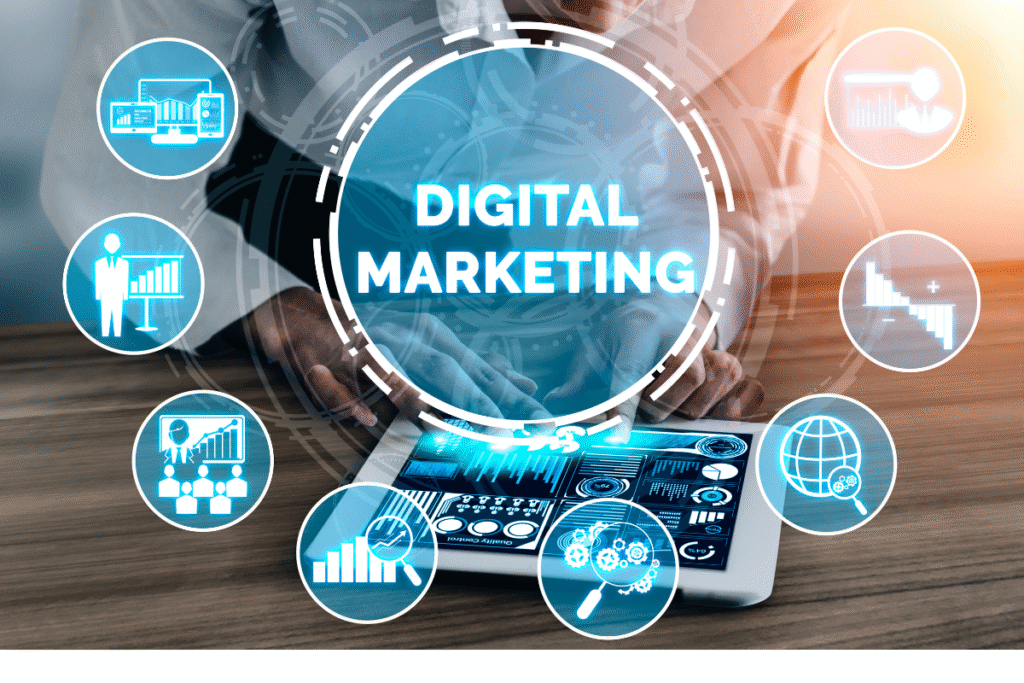
Digital marketing refers to the use of online channels, technologies, and strategies to promote products or services to a target audience. Unlike traditional marketing, which relies on print, TV, or radio, digital marketing takes place across platforms like websites, social media, search engines, email, and mobile apps. It offers businesses the ability to reach global audiences, track campaign performance in real-time, and personalize content based on customer behavior.
2. Core Channels of Digital Marketing
Digital marketing encompasses several key channels, each serving a unique purpose. Search Engine Optimization (SEO) helps improve website visibility on Google, while Pay-Per-Click (PPC) ads deliver immediate traffic. Social media marketing engages audiences on platforms like Instagram and LinkedIn. Content marketing focuses on creating valuable articles, videos, or guides, and email marketing is used for nurturing leads and customer retention. Together, these channels form a comprehensive digital strategy.
3. Why Digital Marketing Matters Today
With more than half of the world’s population online, digital marketing has become essential for business growth. Consumers today start their buying journey on the internet — researching brands, reading reviews, and comparing products. Digital marketing allows businesses to meet customers where they are, providing relevant information, offers, and experiences at every stage of the customer journey. It’s cost-effective, scalable, and often delivers higher ROI than traditional methods.
4. Data-Driven and Measurable
One of the biggest advantages of digital marketing is its measurability. Using tools like Google Analytics or Meta Ads Manager, businesses can track how many people clicked an ad, signed up for a newsletter, or purchased a product. This data allows marketers to make informed decisions, adjust campaigns on the fly, and continuously improve performance. In an era where marketing budgets must prove results, digital analytics is a game-changer.
5. The Future of Digital Marketing
As technology evolves, so does digital marketing. Trends like AI-generated content, voice search, influencer marketing, and immersive experiences through AR/VR are shaping the future. Brands that stay agile and embrace innovation will have the edge. Ultimately, digital marketing isn’t just a strategy — it’s a mindset. It’s about understanding your audience, delivering value online, and building meaningful relationships in a digital world.